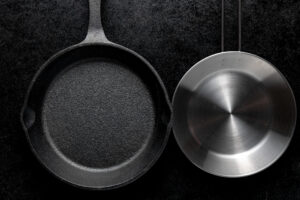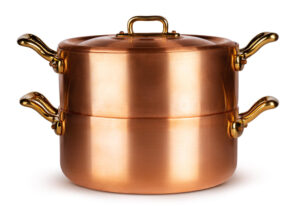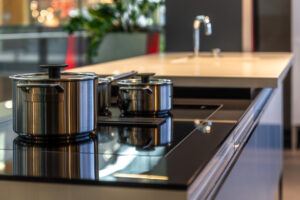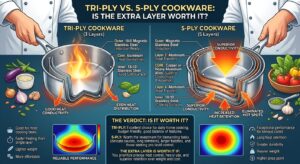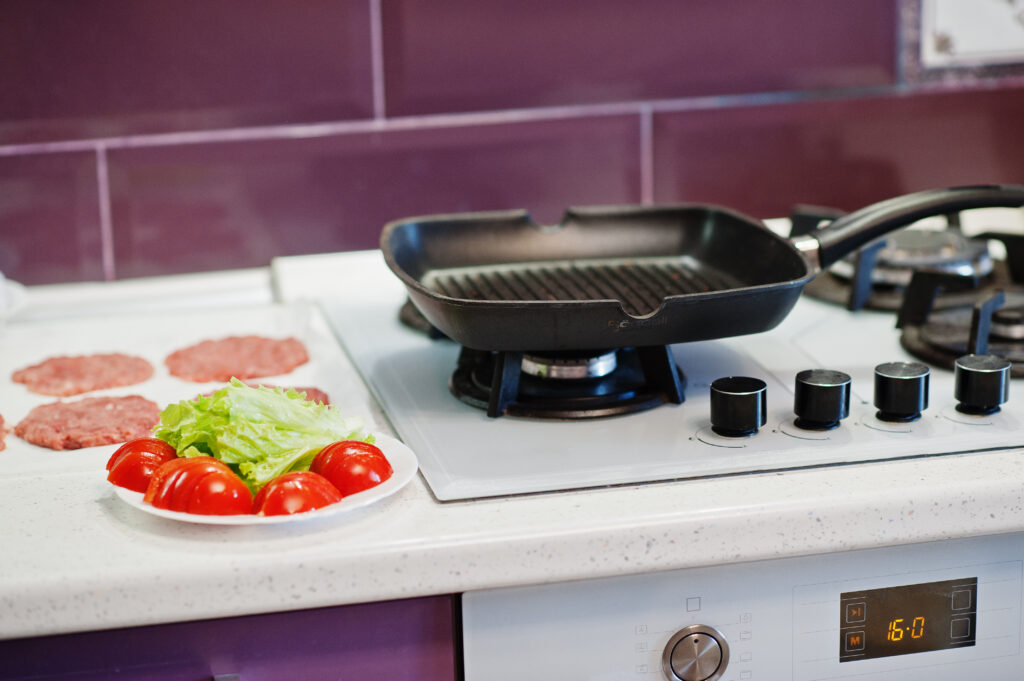
A grill pan heating on a gas stove, demonstrating cookware suitable for even heat distribution and high-temperature cooking.
Our team has tested over 200 pots and pans on gas flames. We evaluate flame control, heat distribution, handle safety, and warp resistance for real home cooking.
• Ultimate Guide to Choosing the Perfect Cookware Set
• Best Non-Stick Pans for Healthy Cooking
• Stainless Steel vs Non-Stick
• Cast Iron Care: How to Season and Maintain
• How to Season a Cast Iron Skillet
• Best Oil for Seasoning Cast Iron
• How to Clean Stainless Steel Pans
• Non-Toxic Cookware Guide
• How to Remove Rust from Cast Iron
• Dutch Oven Buying Guide
Best Cookware for Gas Stoves: Complete Guide (2025)
Gas stoves offer instant heat, precise flame control, and the joy of cooking with fire. But not all cookware performs equally over an open flame. Choosing the best cookware for gas stoves means looking for materials that handle high heat, resist warping, and distribute heat evenly across the burner.
At potspansset.com, we have tested dozens of pots and pans on gas burners – from low simmer to rolling boil. This guide reveals which materials excel on gas, what features matter most for flame contact, and our top recommendations for every budget.
What You Will Learn
- Why gas stoves need different cookware than electric or induction
- Best materials for gas: stainless steel, cast iron, carbon steel, and non-stick
- What to look for: flat bottoms, heat‑resistant handles, and flame compatibility
- Our top‑rated gas stove cookware picks (Amazon links included)
- How to avoid common gas‑cooking mistakes like warping and hot spots
1. Why Gas Stoves Are Different
Gas flames wrap around the bottom and sides of your pan. This means cookware must withstand direct flame contact without warping. Materials that perform poorly on induction (like thin aluminum) often work fine on gas, but durability matters more when flame licking occurs.
Key Gas‑Specific Requirements:
- Flat bottoms – prevent wobbling on grates and ensure even heat distribution
- High heat tolerance – no melting or warping under high flame
- Diameter match – pan must cover burner to avoid wasted gas and scorched handles
- Handle heat resistance – metal handles heat up; silicone or hollow metal stays cooler
- Warp resistance – thick gauges and multi‑ply construction prevent deformation
Shop Gas Stove Cookware Sets on Amazon →
2. Best Materials for Gas Stoves (Semantic Keyword: Flame Control & Heat Distribution)
| Material | Best For | Heat Distribution | Warp Resistance | Flame Control |
|---|---|---|---|---|
| Stainless Steel | Everyday cooking, searing | Excellent (tri-ply) | High | Precise |
| Cast Iron | Searing, frying, baking | Slow but even | Very High | Excellent heat retention |
| Carbon Steel | Wok cooking, quick frying | Fast, responsive | Medium | Very responsive |
| Non-Stick (Ceramic/PTFE) | Eggs, fish, delicate foods | Good | Low (avoid high heat) | Use low-medium flame |
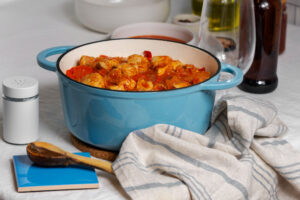
| Enameled Cast Iron | Braising, soups, stews | Slow, steady | High | Excellent for slow cooking |
Shop Stainless Steel Cookware for Gas on Amazon →
3. What to Look for in Gas Cookware (Semantic Keywords: Flame Licking, Grate Stability, Burner Contact)
- Flat Bottom: Warped pans rock on grates and cause uneven heating. Look for thick, flat bases with full burner contact.
- Heat‑Resistant Handles: Silicone‑coated or hollow metal handles stay cooler when flame licking occurs. Always use a potholder.
- Oven‑Safe Construction: Many gas recipes start on the burner and finish in the oven. Ensure cookware (including lids) is oven‑safe to at least 400°F.
- Diameter Match: Match pan size to burner – too small wastes gas, too large may not heat evenly and can cause hot spots.
- Gauge Thickness: Heavy‑gauge cookware (3mm or thicker) resists warping and provides stable grate stability.
4. Top Picks from Amazon
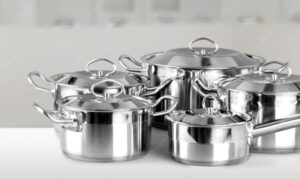
4.1 Tri‑Ply Stainless Steel Gas Cookware Set
10‑piece set with aluminum core for even heat distribution. Oven‑safe to 500°F, riveted handles. Excellent flame control and warp resistance.
4.2 Pre‑Seasoned cast iron skillet (12 inch)
Essential for gas stove searing. Superior heat retention, pre‑seasoned, and lasts generations. Ideal for flame control and even browning.
4.3 Carbon Steel Flat‑Bottom Wok
Ideal for gas stir‑frying. Lightweight, seasons naturally, handles high heat with excellent flame responsiveness.
4.4 Ceramic Non‑Stick Frying Pan
PTFE‑free, PFOA‑free. Works great on low‑to‑medium gas flame for eggs and delicate foods. Easy slide and release.
5. Pro Tips for Cooking on Gas Stoves (Semantic Keywords: Flame Adjustment, Simmer Control, Heat Responsiveness)
- Match pan size to flame – a large flame under a small pan wastes energy and can burn handles. Use proper burner contact.
- Preheat gradually – avoid sudden high heat to prevent warping. Cast iron needs slow heating.
- Use a diffuser for delicate sauces – helps distribute heat evenly and prevents scorching.
- Clean grates regularly – clogged burner ports cause uneven flames and poor heat distribution.
- Turn handles inward – prevents accidental knocks, especially with gas stoves where handles can get hot.
- Adjust flame height – flame should never lick up the sides of the pan; that wastes energy and damages handles.
6. Cookware to Avoid on Gas Stoves
- Very thin aluminum – warps easily under direct flame contact.
- Glass or ceramic cookware – not designed for direct flame; can crack from thermal shock.
- Non‑stick with plastic handles – handles may melt if flame laps up the sides.
- Uncoated copper – reacts with food and can overheat quickly without proper lining.
- Warped or dented pans – will rock on grates and cause hot spots.
7. Frequently Asked Questions
Can I use any pan on a gas stove?
Is stainless steel good for gas stoves?
Do non‑stick pans work on gas?
How to prevent warping on a gas stove?
What is the most durable cookware for gas?
8. Final Expert Recommendations
For gas stove owners, we recommend a hybrid collection that maximizes flame control, heat distribution, and durability:
- 12‑inch cast iron skillet – for searing, frying, and baking (superior heat retention)
- 3‑quart and 5‑quart stainless steel saucepans – for everyday boiling, sauces, soups (excellent warp resistance)
- 10‑inch ceramic non‑stick pan – for eggs, fish, delicate foods (low‑medium flame only)
- Carbon steel wok (optional) – for stir‑frying (fast heat responsiveness)
This combination maximizes the strengths of gas cooking – high heat, instant flame control, and versatility.
Ready to upgrade your gas stove cookware? Browse our top picks above to find the perfect set for your kitchen.
Disclosure: As an Amazon Associate, potspansset.com earns from qualifying purchases. This helps support our ability to provide free, high‑quality content.