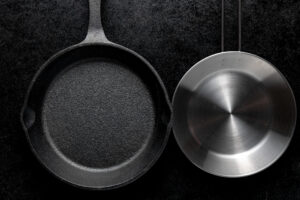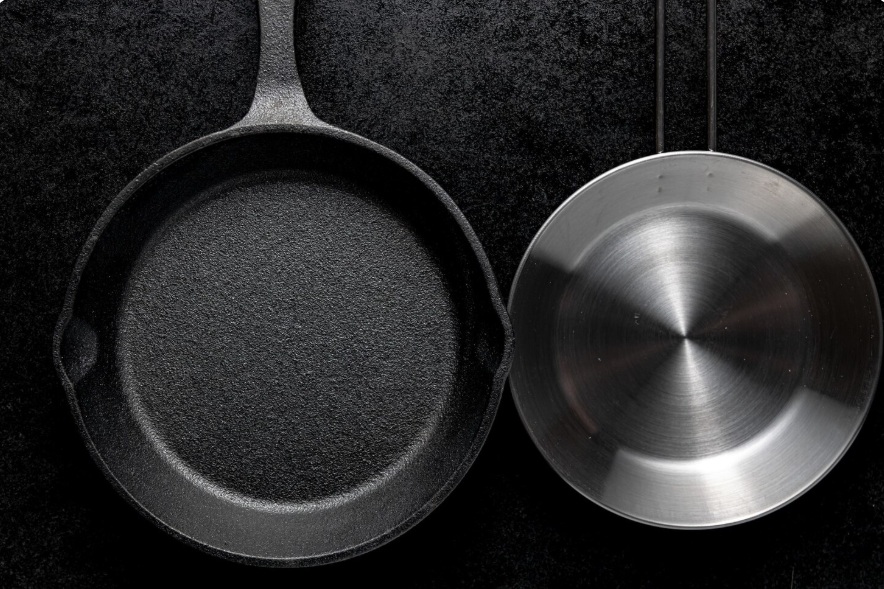
A side-by-side comparison of cast iron and stainless steel pans highlighting key differences in cookware materials.
• Ultimate Guide to Choosing the Perfect Cookware Set
• Best Non-Stick Pans for Healthy Cooking
• Cast Iron Care: How to Season and Maintain
Stainless Steel vs Non-Stick: Complete Comparison Guide
One of the most common questions home cooks face is whether to choose stainless steel or non-stick cookware. Both have passionate advocates, and both offer distinct advantages depending on your cooking style, health priorities, and kitchen habits.
At potspansset.com, we have tested both types extensively. In this comprehensive comparison, we will break down the differences in cooking performance, durability, health considerations, maintenance, and cost—so you can make an informed decision that best suits your kitchen.
What You Will Learn
- The key differences between stainless steel and non-stick cookware
- Which material performs best for specific cooking tasks
- Health and safety considerations for each type
- Durability and lifespan expectations
- Maintenance requirements and care tips
- Cost comparison and value analysis
- Which type is right for your cooking style
1. Quick Overview: Stainless Steel vs Non-Stick
| Feature | Stainless Steel | Non-Stick | \Non-Stick |
|---|---|---|---|
| Best For | Searing, browning, deglazing, high-heat cooking | Eggs, fish, delicate foods, low-oil cooking | |
| Durability | 20+ years with proper care | 3-5 years before coating degrades | |
| Health | Non-reactive, no coatings | PFOA-free options safe; ceramic non-toxic | |
| Maintenance | Dishwasher-safe, metal utensils OK | Hand wash only, soft utensils required | |
| Heat Tolerance | Oven-safe up to 500°F+ | Typically 350-400°F max | |
| Price | Higher upfront cost, lasts decades | More affordable, requires replacement |
2. Cooking Performance Comparison
2.1 Stainless Steel Cooking Performance
Stainless steel cookware is prized by professional chefs for its exceptional high-heat performance. The key to success with stainless steel is technique—when properly preheated, it becomes naturally non-stick through the Leidenfrost effect.
Strengths:
- Searing: Creates a beautiful brown crust on meats and vegetables
- Deglazing: The browned bits (fond) stuck to the pan create flavorful sauces
- High-heat cooking: Can handle temperatures up to 500°F+
- Even heating: Quality tri-ply construction distributes heat uniformly
Weaknesses:
- Requires proper preheating to prevent sticking
- Food can stick if technique is incorrect
- Heavier than non-stick alternatives
Best For: Steaks, chicken breast, stir-fries, sauces, sautéed vegetables, dishes requiring deglazing.
Shop Premium Stainless Steel Cookware on Amazon →
2.2 Non-Stick Cooking Performance
Non-stick cookware excels at tasks where sticking is a concern. Its effortless food release makes it ideal for delicate ingredients and low-oil cooking.
Strengths:
- Effortless food release: Perfect for eggs, fish, pancakes, and delicate foods
- Low-oil cooking: Requires minimal oil or butter
- Easy cleanup: Food slides off with minimal effort
- Lightweight: Easy to handle and maneuver
Weaknesses:
- Cannot achieve high-heat searing
- Not suitable for deglazing (no fond formation)
- Coating can scratch or wear over time
Best For: Eggs, fish, pancakes, crepes, grilled cheese, delicate vegetables, low-fat cooking.
Shop Best Non-Stick Frying Pans on Amazon →
3. Durability and Lifespan
3.1 Stainless Steel Durability
Stainless steel is arguably the most durable cookware material available. Quality tri-ply or fully clad stainless steel pans can last 20 years or more with proper care.
Durability Features:
- Resistant to rust, corrosion, and staining
- Can withstand metal utensils without damage
- Dishwasher-safe for convenient cleaning
- No coating to scratch or peel
- Handles are riveted for permanent attachment
When to Replace: Stainless steel rarely needs replacement unless warped, dented, or handles become loose—which can take decades.
3.2 Non-Stick Durability
Non-stick cookware has a limited lifespan due to the coating. Even with perfect care, most non-stick pans last 3 to 5 years before the coating begins to degrade.
Durability Factors:
- Coatings wear down with use over time
- Scratches from metal utensils damage performance
- High heat accelerates coating degradation
- Dishwasher use shortens lifespan significantly
When to Replace: Replace when you notice scratching, peeling, flaking, or when food begins to stick despite proper use.
Shop Non-Stick Pan Protectors on Amazon →
4. Health and Safety Comparison
4.1 Stainless Steel Health Considerations
Stainless steel is widely considered one of the healthiest cookware materials. It is:
- Non-reactive: Will not leach chemicals or react with acidic foods
- Coating-free: No synthetic coatings to degrade into food
- Nickel content: Some people with nickel allergies may need to choose nickel-free stainless steel
Verdict: Excellent choice for health-conscious cooks.
4.2 Non-Stick Health Considerations
Modern non-stick cookware has improved significantly in safety. Key considerations:
- PFOA-free: All modern non-stick pans are PFOA-free (since 2013)
- PTFE concerns: Traditional non-stick uses PTFE; avoid overheating above 500°F
- Ceramic alternative: PTFE-free, made from natural sand and clay
- Safe use: Never heat empty non-stick pans; replace when coating shows wear
Verdict: Safe when used correctly. For maximum peace of mind, choose ceramic non-stick.
Shop Ceramic Non-Stick Pans on Amazon →
5. Maintenance and Care
5.1 Caring for Stainless Steel
- Wash with warm soapy water after each use
- Use stainless steel cleaner or baking soda to remove water spots and discoloration
- Dishwasher-safe, but hand washing preserves luster
- Use metal utensils freely—stainless steel can handle them
- Avoid extreme temperature changes to prevent warping
5.2 Caring for Non-Stick
- Hand wash with soft sponge—never abrasive pads or steel wool
- Use silicone, wood, or nylon utensils only—never metal
- Avoid high heat; cook on low to medium temperatures
- Never stack pans without protective padding
- Replace when coating shows signs of wear
📖 Related Guide: For proper cast iron care, read our Complete Cast Iron Care Guide: How to Season and Maintain.
6. Cost Comparison
| Factor | Stainless Steel | Non-Stick |
|---|---|---|
| Initial Investment | $200–$600 for quality sets | $50–$300 for quality sets |
| Lifespan | 20+ years | 3–5 years |
| Cost Per Year | $10–$30 per year (amortized) | $10–$100 per year (depending on replacement) |
| Long-Term Value | Excellent—one-time investment | Moderate—requires periodic replacement |
Value Verdict: Stainless steel offers better long-term value despite higher upfront cost. Non-stick is more accessible upfront but requires replacement every few years.
7. Which One Should You Choose?
Choose Stainless Steel If:
- You frequently sear meats or cook at high heat
- You enjoy deglazing pans to make sauces
- You want cookware that lasts decades
- You prefer a single, all-purpose set
- You don’t mind learning proper preheating technique
- You use metal utensils regularly
Choose Non-Stick If:
- You cook eggs, fish, or pancakes frequently
- You prefer cooking with minimal oil
- You prioritize quick and easy cleanup
- You are a beginner cook still developing technique
- You have a limited upfront budget
- You prefer lightweight cookware
The Best of Both Worlds: Keep Both
Most experienced home cooks keep both types in their kitchen. A typical setup includes:
- Stainless steel skillet and saucepan for searing, sauces, and high-heat cooking
- Non-stick frying pan for eggs, fish, and delicate foods
- Stainless steel stockpot for soups, pasta, and large batches
This combination gives you the versatility to handle any cooking task with the right tool for the job.
8. Top Picks from Amazon
8.1 Premium Stainless Steel Cookware Set
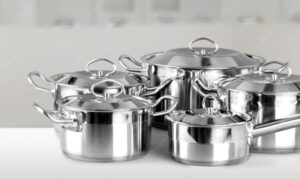
This tri-ply stainless steel set offers professional-grade performance with bonded aluminum core for even heating. Riveted handles and oven-safe construction make it a lasting investment.
Key Features:
- ✓ Tri-ply construction with aluminum core
- ✓ Oven-safe up to 500°F
- ✓ Induction-compatible
- ✓ Dishwasher-safe
8.2 PFOA-Free Non-Stick Cookware Set
This complete non-stick set features PFOA-free coating for safe, healthy cooking. The set includes all essential pieces with comfortable stay-cool handles.
Key Features:
- ✓ PFOA-free non-stick coating
- ✓ Tempered glass lids
- ✓ Stay-cool ergonomic handles
- ✓ Oven-safe up to 400°F
8.3 Ceramic Non-Stick Frying Pan
For health-conscious cooks, this PTFE-free, PFOA-free ceramic frying pan offers natural non-stick performance without synthetic chemicals.
Key Features:
- ✓ PTFE-free and PFOA-free ceramic coating
- ✓ Scratch-resistant surface
- ✓ Stay-cool handle
- ✓ Oven-safe up to 450°F
8.4 Tri-Ply Stainless Steel Skillet
For those building a hybrid kitchen, this tri-ply stainless steel skillet delivers professional searing performance while you keep your non-stick for eggs.
Key Features:
- ✓ Tri-ply construction for even heating
- ✓ Oven-safe up to 500°F
- ✓ Riveted stainless steel handle
- ✓ Induction-compatible
9. Frequently Asked Questions
Which is better: stainless steel or non-stick cookware?
Neither is universally better—it depends on your cooking style. Stainless steel excels at high-heat searing and durability, while non-stick is ideal for eggs, fish, and easy cleanup. Many home cooks keep both types for different tasks.
Is stainless steel cookware healthier than non-stick?
Both can be healthy. Stainless steel is non-reactive and contains no coatings. Modern PFOA-free non-stick is also safe. For the healthiest non-stick option, choose ceramic or PFOA-free coatings.
Can I use metal utensils on stainless steel pans?
Yes. Stainless steel is highly durable and can withstand metal utensils, unlike non-stick pans which require silicone, wood, or nylon utensils.
Which cookware lasts longer: stainless steel or non-stick?
Stainless steel lasts significantly longer—often 20+ years with proper care. Non-stick pans typically last 3-5 years before the coating begins to degrade.
Can I cook eggs in stainless steel without sticking?
Yes, with proper technique. Preheat the pan, add oil, and allow the oil to heat before adding eggs. The Leidenfrost effect creates a natural non-stick surface when done correctly.
10. Final Thoughts
The choice between stainless steel and non-stick cookware ultimately comes down to your cooking style, priorities, and willingness to maintain each material. Stainless steel offers unmatched durability, high-heat performance, and long-term value—but requires proper technique to prevent sticking. Non-stick provides effortless food release and easy cleanup—but has a shorter lifespan and cannot handle high-heat searing.
For most home cooks, the ideal solution is a hybrid approach: invest in a quality stainless steel set for searing, sauces, and everyday cooking, and keep one or two non-stick pans for eggs, fish, and delicate dishes. This combination gives you the best of both worlds.
Ready to upgrade your cookware? Browse our top recommendations above to find the perfect stainless steel or non-stick options for your kitchen.
Disclosure: As an Amazon Associate, potspansset.com earns from qualifying purchases. This helps support our ability to provide free, high-quality content for our readers.