• Ultimate Guide to Choosing the Perfect Cookware Set
• Best Non-Stick Pans for Healthy Cooking
• Stainless Steel vs Non-Stick: Complete Comparison
• Cast Iron Care: How to Season and Maintain
• Ceramic Cookware: Pros, Cons, and Safety Complete Guide
• Induction Cookware: What You Need to Know Complete Guide
• Best Cookware Sets for Beginners: Complete Buying Guide
• Top 10 Kitchen Essentials Every Home Cook Needs
• Dutch Oven Buying Guide: How to Choose the Perfect Dutch Oven
• Non-Stick Pan Care: How to Make Them Last
• How to Season a Cast Iron Skillet: Complete Step-by-Step Guide
• Best Oil for Seasoning Cast Iron: Complete Guide
How to Clean Stainless Steel Pans: Remove Burned Oil & Discoloration
Stainless steel pans are beloved for their durability, professional appearance, and excellent heat distribution. But even the best stainless steel Cookware eventually shows signs of use—burned oil residue, rainbow discoloration, and stubborn stuck-on food. Learning how to clean stainless steel pans properly will keep them looking new for decades.
At potspansset.com, we have tested every cleaning method on dozens of stainless steel pans. In this comprehensive guide, we will teach you how to clean stainless steel pans using simple household ingredients and professional products to remove burned oil, fix discoloration, and make your pans shine like new again.
What You Will Learn
- How to remove burned oil from stainless steel pan
- Stainless steel pan discoloration fix for rainbow stains
- How to clean burnt stainless steel pan using household ingredients
- How to use Bar Keepers Friend stainless steel cleaner
- Vinegar baking soda stainless steel cleaning method
- Daily maintenance to keep pans looking new
- Products that help make stainless steel pans look new again
1. Why Stainless Steel Pans Get Stained and Discolored
Before learning how to clean stainless steel pans, it helps to understand what causes the stains.
Common Stainless Steel Pan Problems:
- Rainbow discoloration: Caused by overheating or cooking with hard water. This is purely cosmetic.
- Burned oil residue: Cooking oil that overheats leaves a brown or black polymerized layer.
- White spots: Mineral deposits from hard water or overheating.
- Stuck-on food: Food that burns onto the surface from high heat.
Good news: all of these can be removed with the right techniques. Learning how to clean stainless steel pans means you’ll never need to replace them due to appearance.
Shop Stainless Steel Cookware Sets on Amazon →
2. Daily Cleaning: How to Clean Stainless Steel Pans After Regular Use
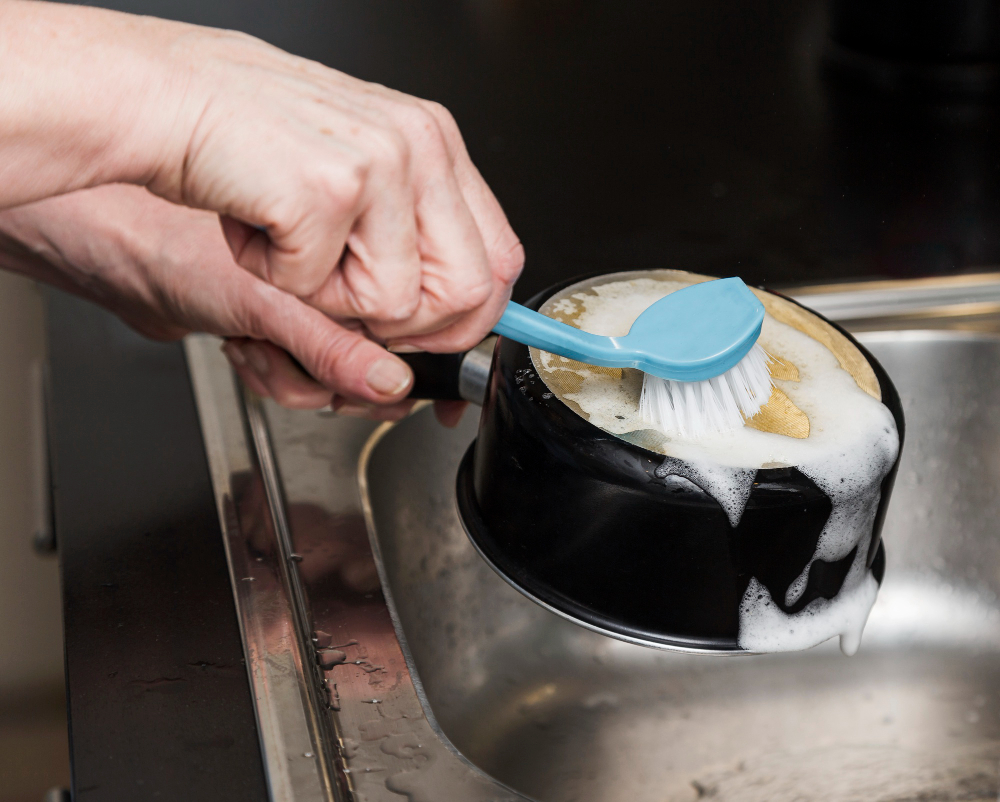
The easiest way to clean stainless steel pans is to prevent buildup in the first place. Here is the daily routine for how to clean stainless steel pans after regular cooking.
Step-by-Step Daily Cleaning:
- Deglaze while hot: After cooking, pour a small amount of water into the hot pan. It will bubble and steam, loosening stuck food. Scrape with a spatula.
- Let cool slightly: Never put a hot pan under cold water (thermal shock can warp the pan).
- Wash with warm soapy water: Use a soft sponge and mild dish soap.
- Rinse and dry immediately: Dry with a soft towel to prevent water spots.
This simple daily routine is the best way how to clean stainless steel pans without heavy scrubbing.
3. How to Remove Burned Oil from Stainless Steel Pan
Burned oil is one of the toughest stains to remove. Here is how to remove burned oil from stainless steel pan using household ingredients.
Method 1: Baking Soda Paste (For Light to Moderate Burned Oil)
Baking soda is slightly abrasive and excellent for how to clean stainless steel pans with stuck oil.
- Sprinkle a generous amount of baking soda on the burned areas
- Add a small amount of water to form a paste
- Let sit for 15-20 minutes
- Scrub with a soft sponge in circular motions
- Repeat if necessary
- Rinse and dry
This baking soda stainless steel cleaning method works for most everyday burned oil.
Method 2: Boil Vinegar and Baking Soda (For Severe Burned Oil)
For how to get burned oil off stainless steel pan when baking soda alone isn’t enough:
- Fill the pan with water (about 1-2 inches)
- Add 1/2 cup white vinegar
- Bring to a boil
- Let cool completely
- Drain the liquid
- Sprinkle baking soda over the affected areas
- Scrub with a soft sponge
- Rinse and dry
The vinegar baking soda stainless steel combination is powerful for removing stubborn burned oil.
Shop Baking Soda for Cleaning on Amazon →
4. How to Clean Burnt Stainless Steel Pan (Heavy Burns)
When food is severely burnt onto the pan, you need more powerful methods. Here is how to clean burnt stainless steel pan completely.
Method 1: Bar Keepers Friend (Most Effective)
Bar Keepers Friend stainless steel cleaner is the gold standard for how to clean burnt stainless steel pan.
- Wet the pan surface
- Sprinkle Bar Keepers Friend powder
- Make a paste with a few drops of water
- Let sit for 1-2 minutes (not longer)
- Scrub gently with a soft sponge
- Rinse thoroughly
- Repeat if needed
- Wash with soap and water, dry immediately
Bar Keepers Friend stainless steel cleaner removes even the toughest burns without scratching when used correctly.
Method 2: Boiling Baking Soda (For Baked-On Carbon)
- Fill the pan with water
- Add 3-4 tablespoons of baking soda
- Bring to a boil
- Simmer for 10-15 minutes
- Let cool
- Scrub with a sponge
- Repeat as needed
This method helps make stainless steel pans look new again even after severe burning.
Shop Bar Keepers Friend Stainless Steel Cleaner on Amazon →
5. Stainless Steel Pan Discoloration Fix: Removing Rainbow Stains
Rainbow discoloration is common and easy to fix. Here is your stainless steel pan discoloration fix.
What causes rainbow stains? Overheating or cooking with hard water creates a thin oxide layer that refracts light like a rainbow. It doesn’t affect cooking but looks unsightly.
How to fix stainless steel pan discoloration:
- Pour white vinegar into the pan (enough to cover the bottom)
- Let sit for 5-10 minutes
- Rub the area with a soft sponge
- Rinse and dry
Vinegar dissolves the oxide layer. For stubborn rainbow stains, use Bar Keepers Friend stainless steel cleaner following the same method.
Shop White Vinegar on Amazon →
6. How to Clean Stainless Steel Pan Without Scratching
A common concern is scratching the surface. Here is how to clean stainless steel pan without scratching.
Do’s:
- Use soft sponges or non-abrasive scrubbers
- Use baking soda (mildly abrasive but safe)
- Use Bar Keepers Friend (gentle when used correctly)
- Scrub in the direction of the grain (if visible)
- Let cleaners sit to soften residue
Don’ts:
- Never use steel wool
- Never use abrasive scrub pads
- Never use bleach or harsh chemicals
- Never scrape with metal utensils during cleaning
Following these guidelines for how to clean stainless steel pans will keep your cookware beautiful for decades.
Shop Non-Abrasive Scrub Sponges on Amazon →
7. Natural Cleaning Methods for Stainless Steel Pans
If you prefer natural cleaners, these methods work well for how to clean stainless steel pans without chemicals.
Lemon and Salt
- Cut a lemon in half
- Dip the cut side in salt
- Rub over discolored or stained areas
- Rinse and dry
- Make a paste with baking soda and lemon juice
- Apply to stained areas
- Let sit for 10 minutes
- Scrub with a soft sponge
- Rinse and dry
- Apply Bar Keepers Friend stainless steel cleaner to the entire surface
- Let sit for 2-3 minutes
- Scrub gently with a soft sponge
- Rinse thoroughly
- Repeat for stubborn spots
- Wash with mild soap and water
- Dry immediately
- Polish with a dry cloth for extra shine
- Don’t overheat: Use medium heat for most cooking; stainless steel conducts heat well
- Preheat properly: Heat the pan before adding oil (water droplet test)
- Deglaze after cooking: Add water while the pan is still hot to loosen residue
- Dry immediately: Prevents water spots and mineral deposits
- Store properly: Use pan protectors if stacking
Baking Soda and Lemon
White Vinegar and Baking Soda
The vinegar baking soda stainless steel method works for most stains. Boil vinegar, cool, add baking soda, scrub.
8. How to Make Stainless Steel Pans Look New Again: Complete Restoration
For pans that have seen years of use, here is how to make stainless steel pans look new again with a complete restoration.
Deep Cleaning Process:
This process will help make stainless steel pans look new again even after years of heavy use.
9. Daily Maintenance to Prevent Heavy Cleaning
Prevention is easier than restoration. Follow these tips to reduce how often you need to deep clean.
10. Top Products for Cleaning Stainless Steel Pans
10.1 Bar Keepers Friend Stainless Steel Cleaner
This is the most recommended product for how to clean stainless steel pans. Removes burned oil, discoloration, and stuck food without scratching.
Key Features: Removes stains and rust, gentle abrasive, works on all stainless steel, affordable.
10.2 Baking Soda for Cleaning Pans
Baking soda is a natural, affordable cleaner for how to clean stainless steel pans. Works on light to moderate stains and burned oil.
Key Features: Natural, non-toxic, affordable, effective on most stains.
10.3 White Vinegar for Cleaning
White vinegar is essential for stainless steel pan discoloration fix and removing rainbow stains. Also great for mineral deposits.
Key Features: Natural, affordable, removes discoloration, descales.
10.4 Non-Abrasive Scrub Sponges
These scrub sponges are safe for stainless steel and won’t scratch. Essential for how to clean stainless steel pan without scratching.
Key Features: Non-abrasive, scratch-free, durable, reusable.
11. Frequently Asked Questions
How to get burned oil off stainless steel pan?
To remove burned oil from stainless steel pan, sprinkle baking soda on the affected area, add water to form a paste, let sit for 15-20 minutes, then scrub with a soft sponge. For stubborn oil, use Bar Keepers Friend or boil vinegar and water before scrubbing.
Why does my stainless steel pan have rainbow stains?
Rainbow stains or discoloration on stainless steel pans are caused by overheating or cooking with hard water. This is purely cosmetic and doesn’t affect cooking performance. To fix stainless steel pan discoloration, use Bar Keepers Friend or white vinegar to remove the marks.
How to clean burnt stainless steel pan?
The easiest way to clean burnt stainless steel pan is to fill with water, add 1/2 cup white vinegar, bring to a boil, let cool, sprinkle baking soda, then scrub. For severe burns, use Bar Keepers Friend. This method helps make stainless steel pans look new again.
Is Bar Keepers Friend safe for stainless steel pans?
Yes, Bar Keepers Friend stainless steel cleaner is specifically designed for stainless steel cookware. It removes stains, discoloration, and burned residue without scratching when used correctly. Rinse thoroughly after use.
How to clean stainless steel pan without scratching?
To clean stainless steel pan without scratching, always use soft sponges or non-abrasive scrubbers. Avoid steel wool. Use gentle cleaners like baking soda or Bar Keepers Friend. Never use bleach or harsh chemicals.
12. Final Thoughts
Learning how to clean stainless steel pans is a valuable skill that will keep your cookware looking beautiful for decades. The key is using the right techniques and products for each type of stain.
For daily cleaning, simple soap and water are sufficient. For how to remove burned oil from stainless steel pan, baking soda or the vinegar baking soda stainless steel method works well. For rainbow stains, a quick vinegar wipe is your stainless steel pan discoloration fix. For severe burns, Bar Keepers Friend stainless steel cleaner is the most effective solution.
With proper care, your stainless steel pans will develop a beautiful patina and continue performing perfectly for generations. Remember: never use steel wool, always dry immediately, and address stains promptly to prevent buildup.
Ready to restore your stainless steel pans? Browse our top recommendations above to find the best cleaning products for your kitchen.
Disclosure: As an Amazon Associate, potspansset.com earns from qualifying purchases. This helps support our ability to provide free, high-quality content for our readers.