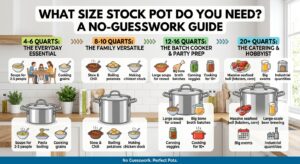
A visual breakdown to help you choose the correct stock pot capacity for everything from weeknight dinners to massive seafood boils.
This post contains affiliate links — as an Amazon Associate, we earn from qualifying purchases.
Every stock pot size chart online tells you roughly the same thing: 6 quarts for small households, 12 quarts for big ones. What most of them skip is that what size stock pot you need actually depends more on what you’re cooking than how many people live in your house. A couple who cans tomatoes every August needs a completely different pot than a couple who just boils pasta on weeknights, even though both are technically “a household of two.”
What Size Stock Pot Do You Actually Need?
Start with the task, not the headcount:
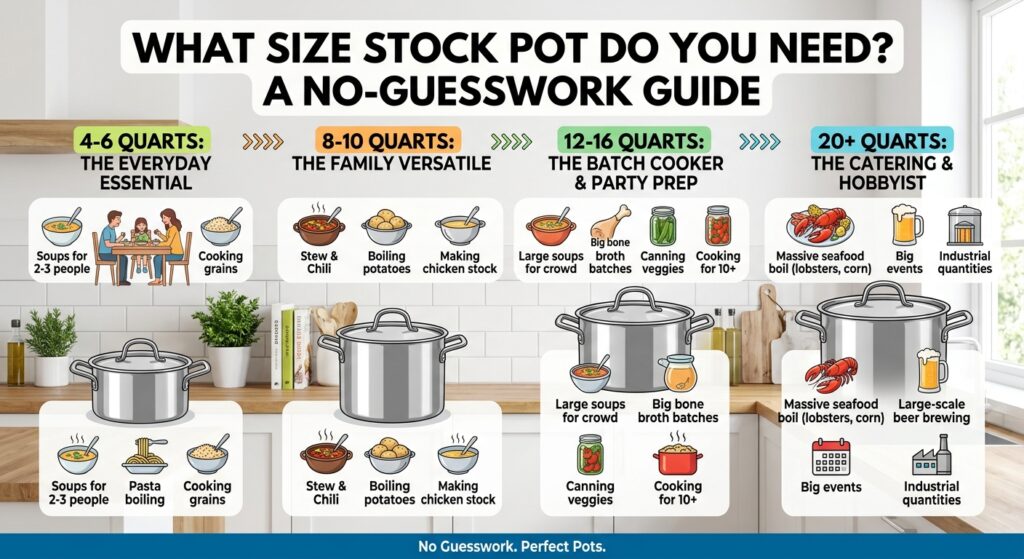
- Weeknight pasta and small soups (1-2 people): A 6-quart pot is plenty and still easy to lift full and store in a normal cabinet.
- Family soups and stews (3-5 people): An 8-quart pot covers most everyday cooking without feeling oversized on a standard burner.
- Bone broth or stock-making: Go bigger than you’d expect, 12 quarts minimum. Broth needs headroom for bones and a long simmer, and a cramped pot means constantly topping up water.
- Water-bath canning: You need at least 2 inches of water covering your jars, which usually means a 12-16 quart pot regardless of household size. This is a canning requirement, not a cooking-volume one, so don’t undersize it based on how many people you’re feeding.
- Big-batch hosting or a turkey fryer setup: 16-20 quarts, but be honest with yourself here. A pot this size is heavy, awkward to store, and only worth it if you actually host large gatherings regularly.
Why Two “8-Quart” Pots Can Behave Differently
Capacity alone doesn’t tell the whole story. A tall, narrow 8-quart pot slows evaporation and works better for long simmers, since there’s less surface area exposed to air. A wide, shallower 8-quart pot evaporates faster, which is actually useful if you’re trying to reduce a sauce or stock down to concentrate the flavor. If you’re deciding between two pots with the same listed volume, check the height-to-width ratio, not just the quart number on the box.
What to Check Beyond Size
Base thickness. A thin base heats unevenly and is more prone to scorching, especially during long simmers where the pot sits on heat for hours.
Handle attachment. Riveted handles hold up far longer than screwed-on ones, particularly once the pot is full and heavy.
Induction compatibility. If your cooktop is induction, confirm the base is magnetic stainless steel before buying — not every stock pot works here, even in stainless steel construction. Our pots and pans set buying guide covers induction compatibility checks in more depth if you’re shopping for a full set alongside your stock pot.
A Simple Way to Decide
If you’re only going to own one stock pot, 8 quarts is the safest all-purpose size for most households — big enough for real batches of soup or stock, still manageable to lift and store. Add a second, larger pot later only if you find yourself canning or making broth regularly enough that the smaller one keeps falling short. If budget is the main constraint right now, our guide to cookware sets under $100 includes stock pot-style pieces that won’t break the bank while you figure out your actual usage pattern.
Frequently Asked Questions
What’s the most versatile stock pot size for a home kitchen? An 8-quart stock pot covers the widest range of everyday tasks, from pasta to family-sized soups, without being too heavy or hard to store.
What size stock pot do I need for canning? At least 12 quarts, and ideally 16, since water-bath canning requires 2 inches of water covering the jar tops, which takes up significant depth beyond the jars themselves.
Is a bigger stock pot always better? No. Larger pots are heavier, harder to store, and require more powerful burners to heat efficiently. Buy based on your actual, recurring cooking tasks rather than the biggest size available.
Do all stock pots work on induction cooktops? No. Even stainless steel stock pots need a magnetic base specifically to work on induction, so it’s worth confirming compatibility before purchasing rather than assuming.
If you’re canning at home, the USDA’s National Center for Home Food Preservation has tested, science-backed guidance on safe water levels and processing times worth checking before your first batch.
Disclosure: This post may contain affiliate links. If you make a purchase through one of our links, we may earn a small commission at no extra cost to you.