This post contains affiliate links — as an Amazon Associate, we earn from qualifying purchases.
If you’ve shopped for stainless steel Cookware above the entry-level tier, you’ve probably run into the tri-ply vs. 5-ply cookware question, usually right around the moment a set jumps from $200 to $400 for what looks like the same pot. The short version: 5-ply adds two extra layers of metal to the core, which improves heat evenness, but whether that improvement matters depends heavily on what you actually cook.
What “Ply” Actually Means
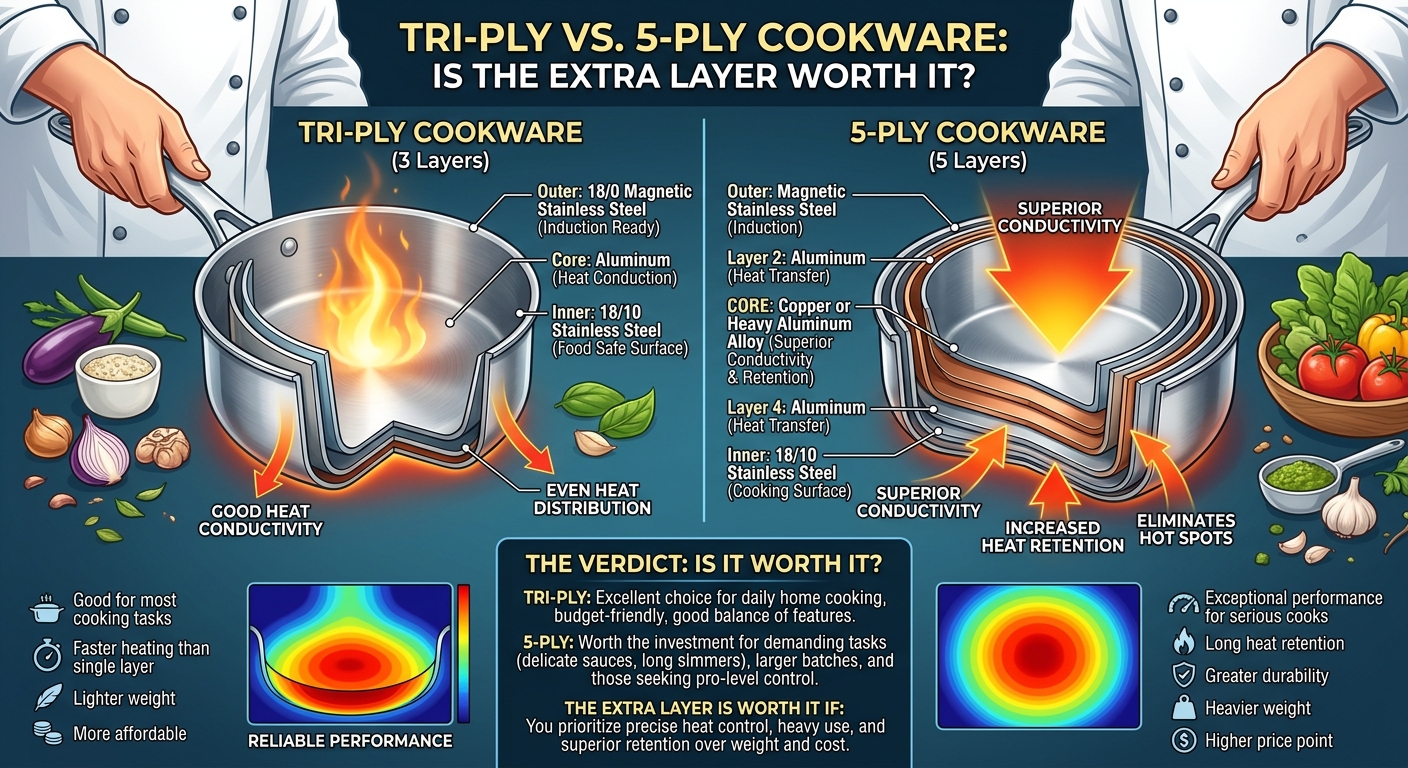
Stainless steel alone conducts heat poorly, which is why cookware bonds it to a more conductive metal, usually aluminum, sandwiched in between. “Ply” just counts how many layers are bonded together. Tri-ply (3-ply) is the standard setup: stainless steel, aluminum core, stainless steel. 5-ply adds two more layers, typically splitting the aluminum core or adding a second conductive layer, for a construction like stainless-aluminum-stainless-aluminum-stainless.
Tri-Ply vs. 5-Ply: The Real Difference
The extra layers in 5-ply cookware do two things: they spread heat more evenly across the base and partway up the sides, and they add rigidity, which can reduce warping over years of use. What they don’t do is make the pan dramatically “better” in a way every cook will notice. For a weeknight stir-fry or a pot of pasta water, tri-ply performs just fine. The gap shows up in more demanding situations: delicate sauces that scorch easily, or large pans where tri-ply can develop a slightly cooler edge compared to the center.
Where 5-Ply Actually Earns Its Price
Large skillets and sauté pans. The bigger the diameter, the more likely tri-ply is to show uneven heat toward the rim. 5-ply’s extra layers help close that gap.
Precision sauce work. Béarnaise, hollandaise, and other easily-broken sauces benefit from the steadier, more forgiving heat 5-ply provides.
Buyers who plan to keep the set for decades. The added rigidity means less long-term warping risk, which matters more if you’re thinking in 20-year terms rather than 5.
👉 Browse 5-ply stainless steel cookware
Where Tri-Ply Is the Smarter Buy
Smaller pieces. Saucepans and smaller skillets have less surface area for heat to unevenly distribute across, so the difference tri-ply vs. 5-ply makes is much less noticeable.
Everyday cooking. Boiling, sautéing, basic searing — the tasks that make up most weeknight cooking — don’t demand the extra precision 5-ply offers.
Budget-conscious buyers. Tri-ply construction, similar to what’s covered in our pots and pans set buying guide, delivers reliable performance without the premium jump in price that 5-ply commands.
👉 Browse tri-ply stainless steel cookware
A Note on Marketing Claims
Not every “5-ply” claim on a listing means what you’d expect. Some manufacturers count microscopically thin bonding layers used to fuse the visible layers together, inflating the ply count without meaningfully changing performance. What actually matters is the total thickness of conductive metal in the core, not the number on the label. If you’re comparing two sets, look for the core’s total gauge or thickness spec rather than trusting the ply number alone.
Is the Price Jump Worth It?
For most home cooks, tri-ply covers 90% of what you’ll ever cook, and the money saved is better spent elsewhere — a good knife, a cast iron skillet, or simply not overspending on a first cookware set. If you already know you cook large batches, delicate sauces, or you’re buying cookware you expect to pass down eventually, the 5-ply premium is a reasonable one to pay. If you’re still deciding on a full set rather than just the construction type, our guide to cookware sets under $100 covers where tri-ply-style construction shows up even at entry-level prices.
Frequently Asked Questions
Is 5-ply cookware actually better than tri-ply? It’s better at spreading heat evenly across larger surfaces and resists warping slightly better over time, but for everyday cooking on smaller pieces, tri-ply performs comparably well.
Does more ply always mean better quality? No. Some brands count thin bonding layers to inflate the ply number without a meaningful performance difference. The core’s total thickness matters more than the number itself.
Is 5-ply worth the extra cost for a beginner? Generally no. Beginners benefit more from learning technique on solid tri-ply cookware before paying a premium for marginal heat improvements they may not yet notice.
Which is more durable, tri-ply or 5-ply? 5-ply tends to be slightly more resistant to warping over many years of use due to its added rigidity, though both are considered durable, long-lasting constructions when properly cared for.
For a deeper technical breakdown of how bonding layers are actually manufactured, Century Life’s cookware ply explainer is a solid independent resource.
Disclosure: This post may contain affiliate links. If you make a purchase through one of our links, we may earn a small commission at no extra cost to you.