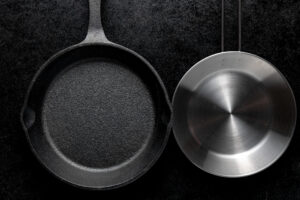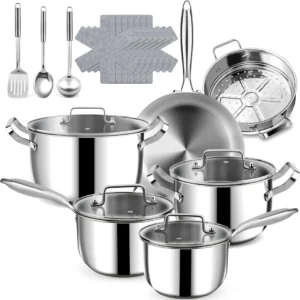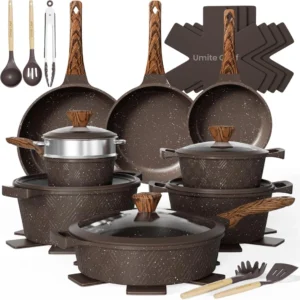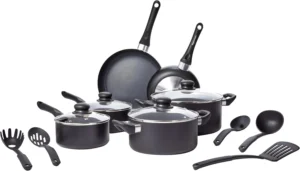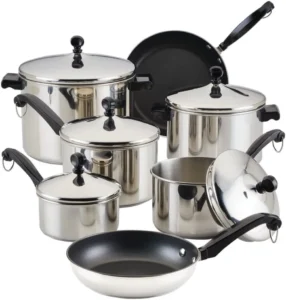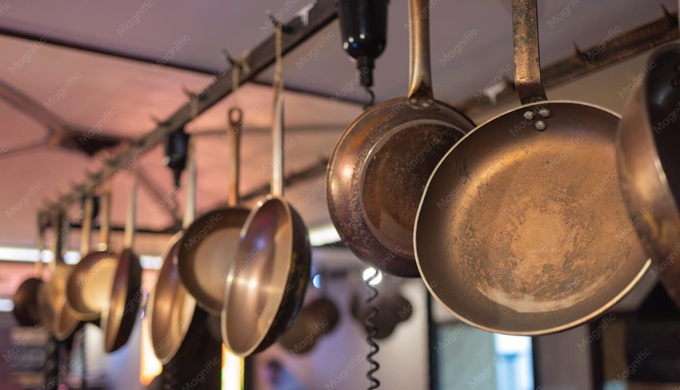
Understanding cookware materials is the key to choosing the right pots and pans.
Our team has tested every cookware material – stainless steel, cast iron, ceramic, non-stick, copper, and aluminum. We evaluate durability, heat distribution, safety, and maintenance to help you make the best choice for your kitchen.
• Ultimate Guide to Choosing the Perfect Cookware Set
• Stainless Steel vs Non-Stick
• Cast Iron Care: How to Season and Maintain
• Ceramic Cookware: Pros, Cons, and Safety
• Non-Stick Pan Care: How to Make Them Last
• How to Clean Stainless Steel Pans
• Non-Toxic Cookware Guide
• Cast Iron vs Stainless Steel Cookware
• Ceramic vs Stainless Steel Cookware
• Best Non-Toxic Cookware Brands
Cookware Materials Explained: The Ultimate Guide (2025)
Cookware materials explained – it’s a topic that can feel overwhelming, but understanding the differences between stainless steel, cast iron, ceramic, non-stick, copper, and aluminum is the key to choosing the right pots and pans for your kitchen. Each material has unique strengths and trade-offs.
At potspansset.com, we have tested every cookware material extensively. This cookware materials guide breaks down each material’s performance, durability, safety, maintenance, and best use cases so you can make an informed decision.
Quick Summary
Best All-Around: Stainless Steel – durable, versatile, non-reactive.
Best Heat Retention: Cast Iron – holds heat perfectly for searing and slow cooking.
Best Non-Stick: PTFE-based – excellent food release, but short lifespan.
Best Non-Toxic Non-Stick: Ceramic – PTFE-free, PFOA-free, but delicate.
Best Temperature Control: Copper – precise and responsive.
Best Budget: Aluminum – lightweight, affordable, but reactive.
1. Explainer: Cookware Materials Explained – The Big Picture
Before diving into each material, let’s understand the key factors that differentiate them:
- Heat Retention: How well the pan holds heat (cast iron wins).
- Heat Responsiveness: How quickly the pan reacts to temperature changes (copper wins).
- Durability: How long the pan lasts with proper care (stainless steel and cast iron).
- Non-Stick Performance: How easily food releases (non-stick wins).
- Safety: Whether the material leaches chemicals (stainless steel and cast iron).
- Maintenance: How much care the pan requires (stainless steel is easiest).
2. Educational Listicle: 6 Cookware Materials at a Glance
2.1 Stainless Steel
Best For: Everyday cooking, searing, deglazing, sauces
Pros: Durable, non-reactive, dishwasher-safe, oven-safe
Cons: Requires proper preheating to prevent sticking
Lifespan: 20+ years
Shop Stainless Steel Cookware on Amazon →
2.2 Cast Iron
Best For: Searing, frying, baking, slow cooking
Pros: Superior heat retention, naturally non-stick when seasoned, heirloom quality
Cons: Heavy, requires seasoning, not dishwasher-safe
Lifespan: Generations
Shop Cast Iron Cookware on Amazon →
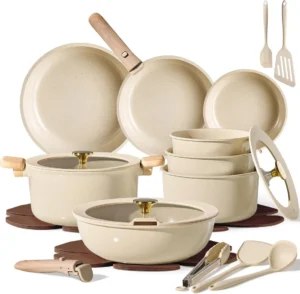
2.3 Ceramic
Best For: Eggs, fish, delicate foods, low-oil cooking
Pros: PTFE-free, PFOA-free, non-toxic
Cons: Shorter lifespan, delicate coating, hand wash only
Lifespan: 2-3 years
Shop Ceramic Cookware on Amazon →
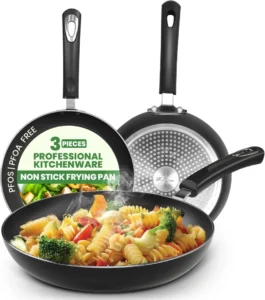
2.4 Non-Stick (PTFE-Based)
Best For: Eggs, fish, pancakes, delicate foods
Pros: Excellent food release, easy cleanup
Cons: Short lifespan, avoid high heat, requires gentle care
Lifespan: 3-5 years
Shop Non-Stick Cookware on Amazon →
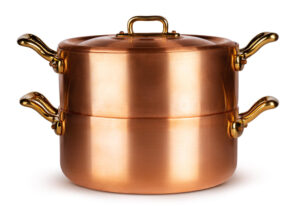
2.5 Copper
Best For: Precise temperature control, delicate sauces
Pros: Excellent heat conductivity, responsive
Cons: Expensive, requires polishing, reactive with acidic foods
Lifespan: Decades (with re-tinning)
Shop Copper Cookware on Amazon →
2.6 Aluminum
Best For: Budget cooking, lightweight pans
Pros: Affordable, lightweight, good heat conductor
Cons: Can react with acidic foods, may warp
Lifespan: 5-10 years (depends on quality)
Shop Hard-Anodized Aluminum Cookware on Amazon →
3. Product Comparison: Cookware Materials Compared
Here is a side-by-side comparison of cookware materials across key categories:
| Material | Best For | Heat Retention | Durability | Non-Stick | Maintenance | Price |
|---|---|---|---|---|---|---|
| Stainless Steel | Everyday | ★★★☆☆ | ★★★★★ | No | Easy | $$ |
| Cast Iron | Searing | ★★★★★ | ★★★★★ | Yes (seasoned) | Moderate | $ |
| Ceramic | Delicate foods | ★★★☆☆ | ★★☆☆☆ | Yes | Moderate | $$ |
| Non-Stick | Eggs, fish | ★★☆☆☆ | ★★☆☆☆ | Yes | Easy | $$ |
| Copper | Precision cooking | ★★☆☆☆ | ★★★★☆ | No | Difficult | $$$ |
| Aluminum | Budget cooking | ★★☆☆☆ | ★★★☆☆ | No | Easy | $ |
4. Cookware Materials Explained: Pros and Cons Deep Dive
Stainless Steel – Pros and Cons
Pros: Extremely durable, non-reactive, dishwasher-safe, oven-safe to 500°F+, professional performance.
Cons: Requires proper preheating to prevent sticking, higher upfront cost, can show water spots.
Cast Iron – Pros and Cons
Pros: Superior heat retention, naturally non-stick when seasoned, heirloom quality, affordable.
Cons: Heavy, requires seasoning, not dishwasher-safe, can rust if not dried properly.
Ceramic – Pros and Cons
Pros: PTFE-free, PFOA-free, non-toxic, attractive colors.
Cons: Shorter lifespan, delicate coating, hand wash only, requires gentle care.
Non-Stick (PTFE) – Pros and Cons
Pros: Excellent non-stick performance, easy cleanup, lightweight.
Cons: Short lifespan, avoid high heat, requires gentle care, not oven-safe.
Copper – Pros and Cons
Pros: Precise temperature control, responsive to heat changes, professional-grade.
Cons: Expensive, requires polishing, reactive with acidic foods.
Aluminum – Pros and Cons
Pros: Affordable, lightweight, good heat conductor.
Cons: Can react with acidic foods, may warp, not as durable as stainless steel.
5. How‑to Guide: Choosing the Best Cookware Material for You
Choosing the best cookware material depends on your cooking style, maintenance preferences, and budget. Follow these steps:
- Assess your cooking style: If you sear meat frequently, choose stainless steel or cast iron. If you cook eggs and fish often, choose non-stick or ceramic.
- Consider durability needs: Stainless steel and cast iron last decades. Non-stick and ceramic last 2-3 years.
- Evaluate health priorities: Choose stainless steel or cast iron for no coatings. Choose ceramic for PTFE-free non-stick.
- Check maintenance requirements: Non-stick requires gentle hand washing. Stainless steel is dishwasher-safe. Cast iron requires seasoning.
- Consider your budget: Stainless steel is a higher upfront cost but lasts decades. Non-stick is more affordable upfront but requires replacement.
6. Frequently Asked Questions
What is the best cookware material?
Is stainless steel cookware safe?
What is the most durable cookware material?
Is ceramic cookware better than non-stick?
Can I use aluminum cookware safely?
7. Final Expert Recommendations
Understanding cookware materials is the foundation of building a great kitchen. Each material has unique strengths and trade-offs. Here are our expert recommendations:
Our Top Recommendations:
- Best All-Around: Stainless Steel – durable, versatile, non-reactive
- Best Heat Retention: Cast Iron – holds heat perfectly for searing and slow cooking
- Best Non-Stick: PTFE-based – excellent food release, but short lifespan
- Best Non-Toxic Non-Stick: Ceramic – PTFE-free, PFOA-free, but delicate
- Best Temperature Control: Copper – precise and responsive
- Best Budget: Aluminum – lightweight, affordable, but reactive
Our Recommendation: For most home cooks, we recommend keeping a mix – a stainless steel skillet for everyday use, a cast iron pan for searing, and a non-stick or ceramic pan for eggs and delicate foods.
Ready to choose the right cookware material? Browse our top recommendations above to find the perfect set for your kitchen.
Disclosure: As an Amazon Associate, potspansset.com earns from qualifying purchases. This helps support our ability to provide free, high‑quality content. Sources: Consumer Reports, America’s Test Kitchen.