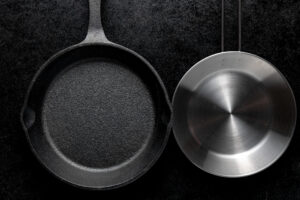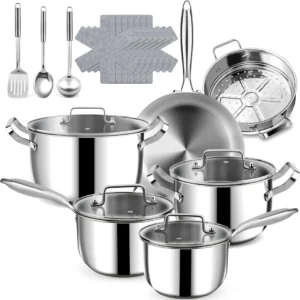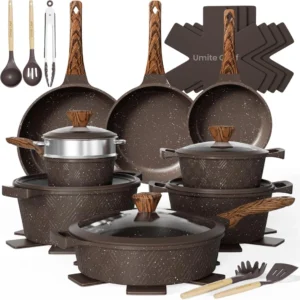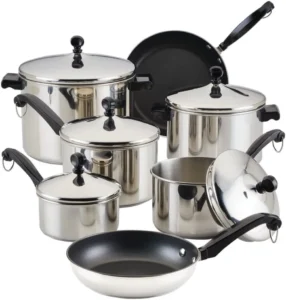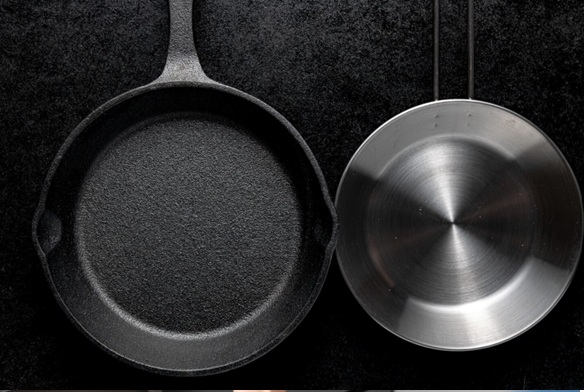
Cast iron cookware (left) vs stainless steel (right) – compare heat retention, durability, and performance.
Our team has tested over 100 cast iron and stainless steel pans side‑by‑side. We evaluate durability, heat retention, searing performance, and maintenance requirements to bring you unbiased comparisons.
• Ultimate Guide to Choosing the Perfect Cookware Set
• Cast Iron Care: How to Season and Maintain
• How to Season a Cast Iron Skillet
• Stainless Steel vs Non-Stick
• How to Clean Stainless Steel Pans
• Ceramic vs Stainless Steel Cookware
• Best Non-Stick Pans for Healthy Cooking
• Best Cookware for Gas Stoves
• Best Cookware for Electric Stoves
• Best Cookware for Induction Cooktops
Cast Iron vs Stainless Steel Cookware: Complete Comparison (2025)
Cast iron vs stainless steel cookware – which is the better choice for your kitchen? Both materials are beloved by home cooks and professional chefs alike, but they serve very different purposes. Understanding the differences in durability, heat retention, cooking performance, and maintenance will help you make the right decision.
At potspansset.com, we have tested both cast iron and stainless steel pans side‑by‑side. This guide breaks down the pros, cons, and real‑world performance of cast iron vs stainless steel cookware so you can choose with confidence.
What You Will Learn
- The key differences between cast iron and stainless steel cookware
- Which material performs best for specific cooking tasks
- Health and safety considerations for each type
- Durability and lifespan expectations
- Maintenance requirements and care tips
- Which type is right for your cooking style
1. Explainer: Cast Iron vs Stainless Steel – What’s the Difference?
Before diving into the comparison, let’s understand what each material actually is.
Cast Iron Cookware: Made from molten iron poured into a mold. It is heavy, retains heat exceptionally well, and develops a natural non‑stick surface when seasoned. It has been used for centuries and is prized for its durability and heat retention.
Stainless Steel Cookware: Made from a durable alloy of iron, chromium, and nickel. It has no coating – the cooking surface is bare metal. It is prized for its durability, non‑reactivity, and professional performance.
Key Difference: Cast iron is heavy with superior heat retention; stainless steel is lighter, more responsive, and requires proper technique to prevent sticking.
2. Product Comparison: Cast Iron vs Stainless Steel at a Glance
Here is a quick comparison of cast iron vs stainless steel cookware across key categories:
| Feature | Cast Iron Cookware | Stainless Steel Cookware |
|---|---|---|
| Best For | Searing, frying, baking, slow cooking | Searing, deglazing, sauces, high‑heat cooking |
| Heat Retention | Excellent – holds heat for a long time | Good – heats up quickly but loses heat faster |
| Durability | Decades – can last generations | 20+ years – virtually indestructible |
| Non-Stick Surface | Yes – naturally non‑stick when seasoned | No – requires proper preheating and oil |
| Heat Tolerance | Any temperature – oven‑safe | 500°F+ – oven‑safe |
| Maintenance | Hand wash only, requires seasoning | Dishwasher‑safe, no seasoning |
| Price Range | $40‑$150 (affordable) | $100‑$600+ (higher upfront cost) |
| Weight | Very heavy | Medium – lighter than cast iron |
3. Educational Listicle: 5 Key Differences Between Cast Iron and Stainless Steel
Here are the 5 most important differences when choosing cast iron vs stainless steel cookware:
- Heat Retention vs Heat Responsiveness – Cast iron holds heat for a long time; stainless steel heats up quickly and responds to temperature changes faster.
- Weight – Cast iron is significantly heavier than stainless steel.
- Non-Stick Surface – Cast iron becomes naturally non‑stick with seasoning; stainless steel requires proper preheating and oil.
- Maintenance – Cast iron requires seasoning and careful cleaning; stainless steel is dishwasher‑safe and low maintenance.
- Acidic Foods – Cast iron can react with acidic foods (tomatoes, wine) if not well‑seasoned; stainless steel is non‑reactive.
4. How‑to Guide: Choosing Between Cast Iron and Stainless Steel
Choosing between cast iron vs stainless steel cookware depends on your cooking style. Follow this step‑by‑step guide:
- Assess your cooking style – If you sear steak, bake cornbread, or slow‑cook, cast iron is excellent. If you make sauces, deglaze, or need responsive heat control, stainless steel wins.
- Consider your strength and comfort – Cast iron is heavy; stainless steel is lighter and easier to handle.
- Evaluate maintenance willingness – Cast iron requires seasoning and careful cleaning; stainless steel is dishwasher‑safe and low maintenance.
- Think about your budget – Cast iron is more affordable upfront; stainless steel is a longer‑term investment.
- Consider your health priorities – Both are safe. Cast iron adds dietary iron to food; stainless steel is non‑reactive.
5. Cast Iron vs Stainless Steel Cookware: Pros and Cons
Cast Iron Cookware – Pros
- ✅ Superior heat retention – holds temperature for perfect searing
- ✅ Naturally non‑stick when properly seasoned
- ✅ Adds dietary iron to food
- ✅ Heirloom quality – lasts generations
- ✅ Versatile – stovetop, oven, grill, campfire
Cast Iron Cookware – Cons
- ❌ Very heavy – can be difficult to handle
- ❌ Requires seasoning and careful maintenance
- ❌ Can react with acidic foods
- ❌ Not dishwasher‑safe
- ❌ Can rust if not dried properly
Shop Cast Iron Cookware on Amazon →
Stainless Steel Cookware – Pros
- ✅ Extremely durable – lasts decades
- ✅ Non‑reactive – works with acidic foods
- ✅ Dishwasher‑safe – low maintenance
- ✅ Lightweight compared to cast iron
- ✅ Handles high heat (500°F+)
Stainless Steel Cookware – Cons
- ❌ Requires proper preheating to prevent sticking
- ❌ Higher upfront cost
- ❌ Can show water spots and discoloration
- ❌ Food can stick without proper technique
Shop Stainless Steel Cookware on Amazon →
6. Health & Safety: Cast Iron vs Stainless Steel
Both materials are considered safe, but there are important differences in cast iron vs stainless steel cookware safety.
Cast Iron Cookware Safety
- ✅ Naturally non‑toxic – no synthetic coatings
- ✅ Adds dietary iron to food (beneficial for many people)
- ⚠️ Can leach iron into food (safe, but may be an issue for those with hemochromatosis)
- ✅ Made from natural materials
Stainless Steel Cookware Safety
- ✅ Non‑reactive – won’t leach chemicals into food
- ✅ No coatings to degrade
- ⚠️ Nickel content – can be an issue for those with severe allergies
- ✅ Choice of professional kitchens for over a century
Verdict: Both are safe. Cast iron adds dietary iron; stainless steel is non‑reactive and low maintenance.
7. How to Care for Cast Iron vs Stainless Steel Cookware
Caring for Cast Iron Cookware
- Clean with warm water and a soft brush (use soap sparingly)
- Dry immediately – never leave wet
- Apply a thin layer of oil after each use
- Season regularly (every 3‑6 months)
- Avoid cooking acidic foods for long periods
- Never put in dishwasher
Caring for Stainless Steel Cookware
- Dishwasher‑safe or hand wash with warm soapy water
- Use Bar Keepers Friend to remove discoloration
- Use metal utensils freely
- Dry immediately to prevent water spots
- Preheat properly to prevent sticking
8. Frequently Asked Questions
Which is better: cast iron or stainless steel cookware?
Is cast iron healthier than stainless steel?
Which is more durable: cast iron or stainless steel?
Can I use cast iron on induction?
What is the best cookware material for beginners?
9. Final Expert Recommendations
Choosing between cast iron vs stainless steel cookware comes down to your cooking style, maintenance preferences, and budget.
Choose Cast Iron If:
- You sear steak, fry chicken, or bake cornbread regularly
- You want superior heat retention for slow cooking
- You enjoy the ritual of seasoning and caring for cookware
- You want heirloom quality that lasts generations
- You have a limited budget
Choose Stainless Steel If:
- You make sauces, deglaze, or need responsive heat control
- You want low‑maintenance cookware
- You cook acidic foods frequently (tomatoes, wine)
- You prefer lighter pans
- You want dishwasher‑safe cookware
Our Recommendation: For most home cooks, we recommend keeping both – a cast iron skillet for high‑heat searing and a stainless steel skillet for sauces and everyday cooking. This gives you the best of both worlds.
Ready to upgrade your cookware? Browse our top recommendations above to find the perfect cast iron or stainless steel set for your kitchen.
Disclosure: As an Amazon Associate, potspansset.com earns from qualifying purchases. This helps support our ability to provide free, high‑quality content. Sources: Consumer Reports, America’s Test Kitchen.