This post contains affiliate links — as an Amazon Associate, we earn from qualifying purchases.
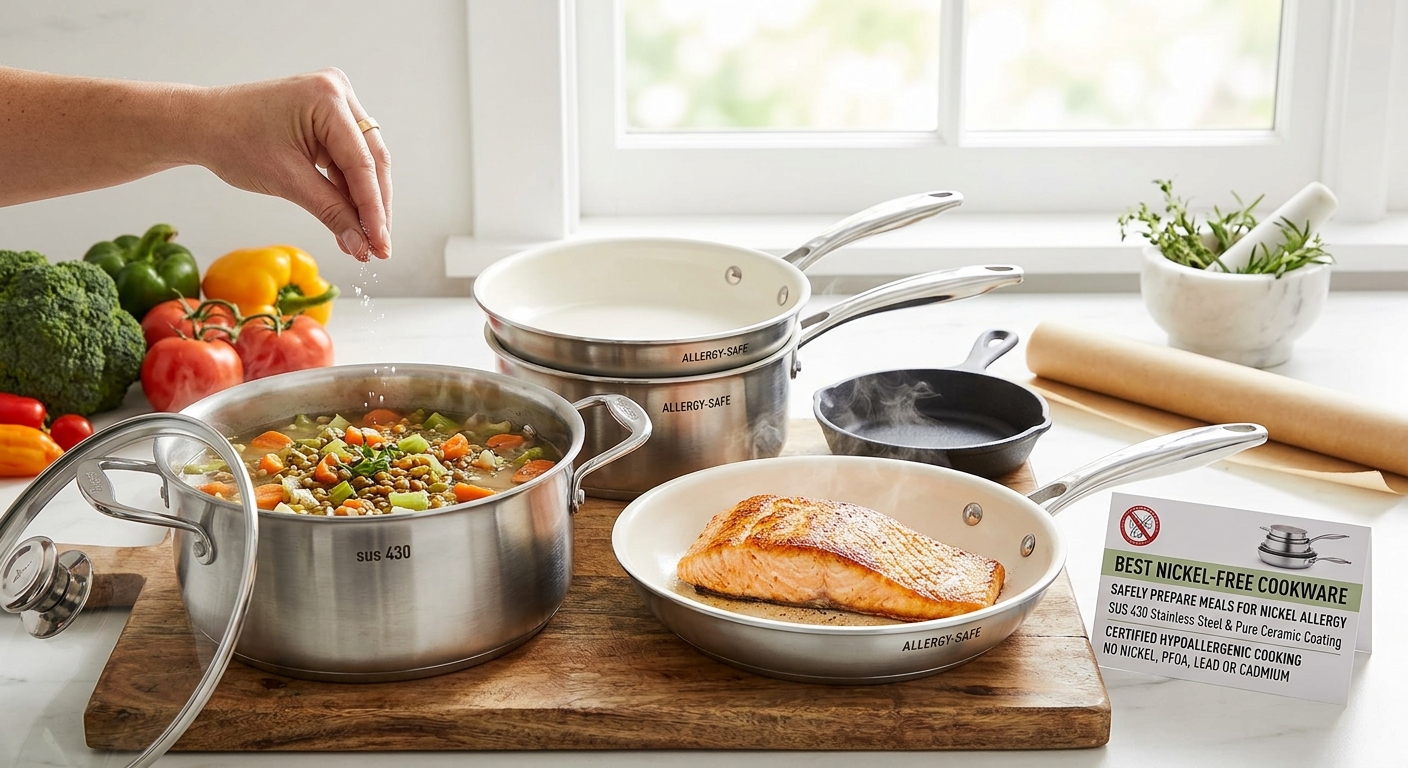
Here’s the thing most advice about nickel-free Cookware for nickel allergy gets backwards: stainless steel is usually the first material people reach for as “safe” and non-reactive, but standard stainless steel actually contains nickel — often 8-10% of the alloy — and can release small amounts into food, especially with acidic ingredients or during long cooking times. If you’re shopping specifically to avoid nickel, “stainless steel” alone isn’t the answer. What grade it is matters.
Why Stainless Steel Isn’t Automatically Nickel-Free
Most cookware-grade stainless steel is labeled by a ratio like 18/10 or 18/8 — that second number is the nickel percentage. An 18/10 pan is roughly 10% nickel by weight, added specifically for shine and corrosion resistance. 18/0 stainless steel, by contrast, contains little to no nickel, but it’s less common in cookware and slightly less corrosion-resistant, which is exactly the tradeoff the nickel was added to solve in the first place. If a product listing doesn’t specify the grade, assume it contains nickel.
What Actually Triggers Nickel Leaching
Nickel release from stainless steel isn’t constant — it’s driven by specific conditions:
- Acidic foods. Tomato sauce, vinegar-based dishes, and citrus significantly increase how much nickel migrates into food compared to neutral foods like rice or water.
- Long cooking times. A quick sauté releases far less nickel than a sauce simmered for an hour.
- New or scratched cookware. Nickel release tends to be highest with brand-new pans and drops over time, but a scratched or pitted surface can reintroduce the problem at any age.
- Repeated use of the same pan for acidic cooking. The effect is cumulative in terms of daily exposure, even though any single meal’s transfer is small.
nickel-free cookware That Actually Works
Cast iron, bare or enameled. Genuinely nickel-free and one of the most widely available options. enameled cast iron adds the benefit of a non-reactive cooking surface, so acidic sauces are also less likely to pick up any metallic taste. Our cast iron skillet guide and Dutch oven guide cover picks in both bare and enameled versions.
👉 Browse cast iron and enameled cast iron cookware
Ceramic-coated nonstick. The ceramic coating itself contains no nickel and creates a barrier between food and whatever metal sits underneath. Our nonstick vs. stainless steel guide covers the broader tradeoffs if you’re deciding between coated and uncoated cookware.
👉 Browse ceramic-coated nonstick cookware
Pure or hard-anodized aluminum. Aluminum itself contains no nickel. Hard-anodized aluminum in particular has a sealed, non-reactive surface layer, making it a solid nickel-free option that still performs well for everyday cooking.
👉 Browse hard-anodized aluminum cookware
Glass and stoneware bakeware. Completely nickel-free, though limited to oven use rather than stovetop cooking.
18/0 stainless steel, if you specifically want stainless. Look for this exact grade called out in the listing — it’s the one stainless steel option that’s actually low in nickel, unlike the far more common 18/10.
What to Double-Check Before Buying
Don’t assume “stainless steel” means safe. Without a specific grade listed (18/0 versus 18/10), assume standard nickel content. If a nickel allergy is a serious concern, contact the manufacturer directly if the listing doesn’t specify.
Utensils and accessories matter too. A nickel-free pot with a stainless steel whisk or spoon touching acidic food for an extended time reintroduces the same issue. Silicone, wood, or ceramic-coated utensils sidestep this entirely.
Vintage or unbranded cookware is the biggest wildcard. Older or off-brand stainless pieces are far less likely to have their exact alloy documented anywhere, which makes new cookware with a clearly stated material the safer bet if you’re managing a real sensitivity.
Frequently Asked Questions
Does all stainless steel cookware contain nickel? Most does. Standard 18/10 and 18/8 stainless steel contain 8-10% nickel by weight. Only 18/0 stainless steel is genuinely low in nickel, and it’s much less common in cookware than the nickel-containing grades.
What cookware is naturally nickel-free? Cast iron (bare or enameled), pure or hard-anodized aluminum, ceramic-coated nonstick, and glass or stoneware bakeware are all naturally free of nickel.
Does cooking acidic food in stainless steel release more nickel? Yes. Acidic ingredients like tomatoes, vinegar, and citrus increase how much nickel transfers from the pan into food compared to neutral foods, and longer cooking times increase it further.
Is enameled cast iron safe for someone with a nickel allergy? Yes. The enamel coating creates a non-reactive barrier between the iron and the food, making it one of the more reliable nickel-free options for cooking acidic dishes specifically.
If you’re managing a diagnosed nickel allergy, the American Academy of Dermatology’s guidance on nickel allergy covers broader exposure sources and symptom management beyond cookware alone.
Disclosure: This post may contain affiliate links. If you make a purchase through one of our links, we may earn a small commission at no extra cost to you.