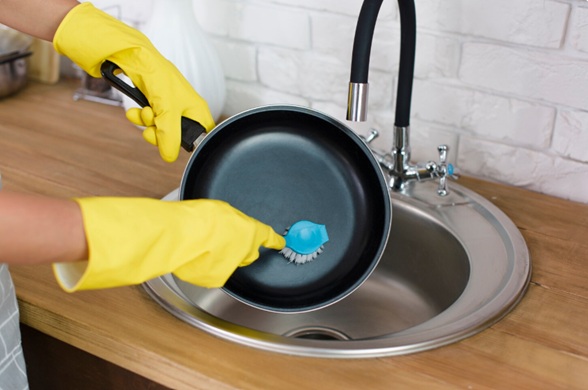
Our team has tested and maintained hundreds of cookware pieces across all materials – non-stick, stainless steel, cast iron, ceramic, and copper. These maintenance tips are proven to extend the life of any pan.
• Ultimate Guide to Choosing the Perfect Cookware Set
• Non-Stick Pan Care: How to Make Them Last
• How to Clean Stainless Steel Pans
• Cast Iron Care: How to Season and Maintain
• How to Season a Cast Iron Skillet
• How to Remove Rust from Cast Iron
• Ceramic Cookware: Pros, Cons, and Safety
• Best Cookware for Gas Stoves
• Best Cookware for Electric Stoves
• Best Cookware for Induction Cooktops
• Best Budget Cookware Sets
Cookware Maintenance Checklist: Keep Your Pans Like New (2025)
A cookware maintenance checklist is essential for extending the life of your pots and pans. Different materials require different care – but with the right routine, you can keep every pan in your kitchen performing like new for years.
At potspansset.com, we have tested hundreds of cookware pieces across all materials. This comprehensive cookware care guide covers daily, weekly, and monthly maintenance for non-stick, stainless steel, cast iron, ceramic, and copper cookware.
Quick Summary
Daily: Clean after each use, dry immediately, avoid high heat.
Weekly: Deep clean, check for damage, inspect handles.
Monthly: Season cast iron, deep clean stainless steel, inspect for wear.
Yearly: Replace worn non-stick, re-season cast iron, deep clean all cookware.
1. Explainer: Why a Cookware Maintenance Checklist Matters
A how to maintain cookware checklist ensures you:
- Extend the life of your cookware by years
- Prevent rust, scratches, and coating damage
- Maintain non-stick performance
- Save money by avoiding unnecessary replacements
The Golden Rule: Always follow the manufacturer’s care instructions. Different brands have different recommendations.
2. Cookware Maintenance Checklist by Material
2.1 Non-Stick Pans – Maintenance Checklist
| Task | Frequency | Action |
|---|---|---|
| Hand wash with soft sponge | After each use | Use warm soapy water – never steel wool |
| Dry immediately | After each use | Prevents water spots |
| Use soft utensils | Always | Silicone, wood, or nylon – never metal |
| Avoid high heat | Always | Cook on low to medium heat |
| Inspect coating | Monthly | Check for scratches, peeling, or flaking |
| Replace pan | Every 2-3 years | Or when coating shows wear |
Shop Non-Stick Pan Protectors on Amazon →
2.2 Stainless Steel – Maintenance Checklist
| Task | Frequency | Action |
|---|---|---|
| Wash with warm soapy water | After each use | Use a soft sponge – dishawasher-safe |
| Remove water spots | Weekly | Use Bar Keepers Friend or vinegar |
| Dry immediately | After each use | Prevents spots and discoloration |
| Preheat properly | Always | Prevents sticking |
| Check for warping | Monthly | Place a ruler across the bottom |
| Deep clean | Monthly | Use Bar Keepers Friend for burnt-on stains |
Shop Bar Keepers Friend on Amazon →
2.3 Cast Iron – Maintenance Checklist
| Task | Frequency | Action |
|---|---|---|
| Clean with warm water | After each use | Use a brush – soap sparingly |
| Dry immediately | After each use | Use a towel and low heat |
| Apply thin oil layer | After each use | Wipe off excess – should look dry |
| Season regularly | Monthly | Apply oil and bake at 450°F for 1 hour |
| Check for rust | Weekly | Remove rust immediately with vinegar |
| Deep clean | Yearly | Strip and re-season if needed |
Shop Chainmail Cast Iron Scrubbers on Amazon →
2.4 Ceramic Cookware – Maintenance Checklist
| Task | Frequency | Action |
|---|---|---|
| Hand wash with soft sponge | After each use | Never use abrasive pads |
| Dry immediately | After each use | Prevents water spots |
| Use soft utensils | Always | Silicone, wood, or nylon – never metal |
| Avoid high heat | Always | Cook on low to medium heat |
| Check for chips | Weekly | Inspect for cracks or chips |
| Replace pan | Every 2-3 years | Or when coating shows wear |
2.5 Copper Cookware – Maintenance Checklist
| Task | Frequency | Action |
|---|---|---|
| Hand wash with warm soapy water | After each use | Never use abrasive pads |
| Polish with copper cleaner | Monthly | Restores shine |
| Dry immediately | After each use | Prevents tarnish |
| Check lining | Monthly | Inspect for wear – re-tin if needed |
3. Cookware Maintenance Checklist: Daily, Weekly & Monthly
Daily Maintenance Checklist
- ✅ Clean after each use
- ✅ Dry immediately
- ✅ Avoid high heat
- ✅ Use soft utensils
- ✅ Never stack without protection
Weekly Maintenance Checklist
- ✅ Deep clean with appropriate cleaner
- ✅ Inspect handles for looseness
- ✅ Check for scratches or damage
- ✅ Re-season cast iron if needed
Monthly Maintenance Checklist
- ✅ Deep clean all cookware
- ✅ Season cast iron
- ✅ Check for warping
- ✅ Polish copper or stainless steel
- ✅ Inspect non-stick coating
Yearly Maintenance Checklist
- ✅ Replace worn non-stick pans
- ✅ Strip and re-season cast iron
- ✅ Deep clean all cookware
- ✅ Tighten loose handles
- ✅ Check for rust or corrosion
4. Recommended Cleaning Products for Cookware Maintenance
4.1 Bar Keepers Friend (Stainless Steel)
Removes discoloration, burnt food, and water spots. Use on stainless steel and copper.
4.2 Chainmail Scrubber (Cast Iron)
Removes stuck-on food without damaging seasoning. Safe for cast iron and carbon steel.
4.3 Non-Stick Pan Protectors
Prevents scratches when stacking pans. Protects non-stick and ceramic coatings.
4.4 cast iron seasoning Oil
Specially formulated oil for seasoning cast iron. Creates a durable non-stick surface.
5. How‑to Guide: Extend the Life of Your Cookware
- Read the manufacturer’s instructions – different brands have different care requirements.
- Use the right utensils – silicone, wood, or nylon for non-stick; metal is fine for stainless steel.
- Avoid thermal shock – never put a hot pan under cold water.
- Store properly – use pan protectors, hang pans, or stack with care.
- Clean immediately – don’t let food dry on the pan.
- Season cast iron regularly – 2-3 times per year.
- Replace worn cookware – non-stick pans every 2-3 years.
6. Frequently Asked Questions
How often should I clean my cookware?
How do I maintain non-stick pans?
How do I season cast iron?
How do I remove stains from stainless steel?
How do I store cookware to prevent damage?
When should I replace my non-stick pan?
7. Final Expert Recommendations
Following a cookware maintenance checklist is the simplest way to extend the life of your pots and pans. With proper care, your cookware can last for decades – saving you money and ensuring consistent cooking performance.
Our Top Maintenance Tips:
- Non-stick: Hand wash, soft utensils, medium heat – replace every 2-3 years
- Stainless Steel: Bar Keepers Friend, dishwasher-safe, preheat properly
- Cast Iron: Season regularly, dry immediately, oil after each use
- Ceramic: Hand wash, soft utensils, low to medium heat
- Copper: Polish monthly, hand wash, check lining regularly
Ready to start your cookware maintenance routine? Browse our recommended products above to find the best cleaners and tools for your kitchen.
Disclosure: As an Amazon Associate, potspansset.com earns from qualifying purchases. This helps support our ability to provide free, high‑quality content. Sources: Consumer Reports, America’s Test Kitchen.